Rokiškis Old Town on Foot: A Two-Hour Route
You can walk around the centre of Rokiškis in two hours and see almost everything the town is proud of. It all fits into a compact old town, so you need no car, just comfortable shoes.
We have laid out the route the way we would walk it ourselves, starting from the square.
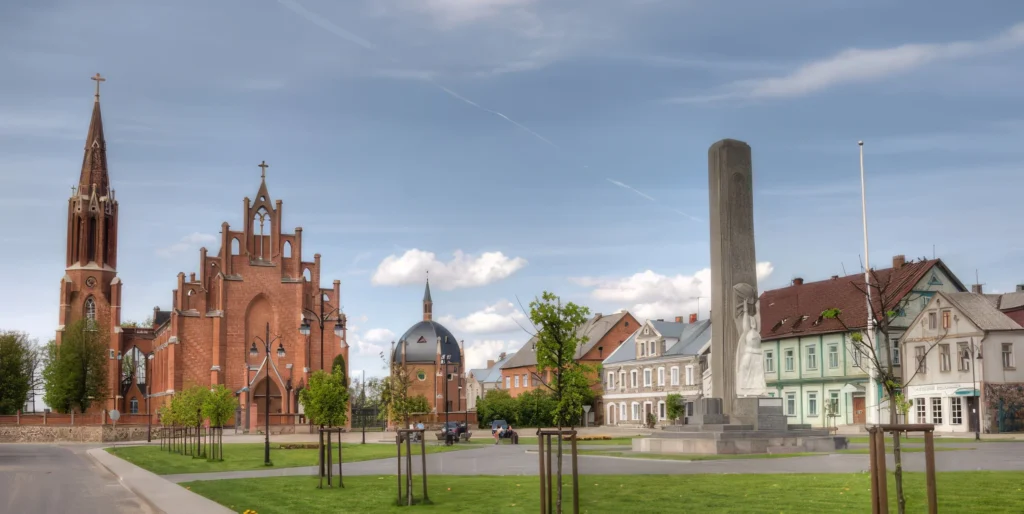
Independence Square is the longest in Lithuania and has kept its shape since the 18th century
Independence Square
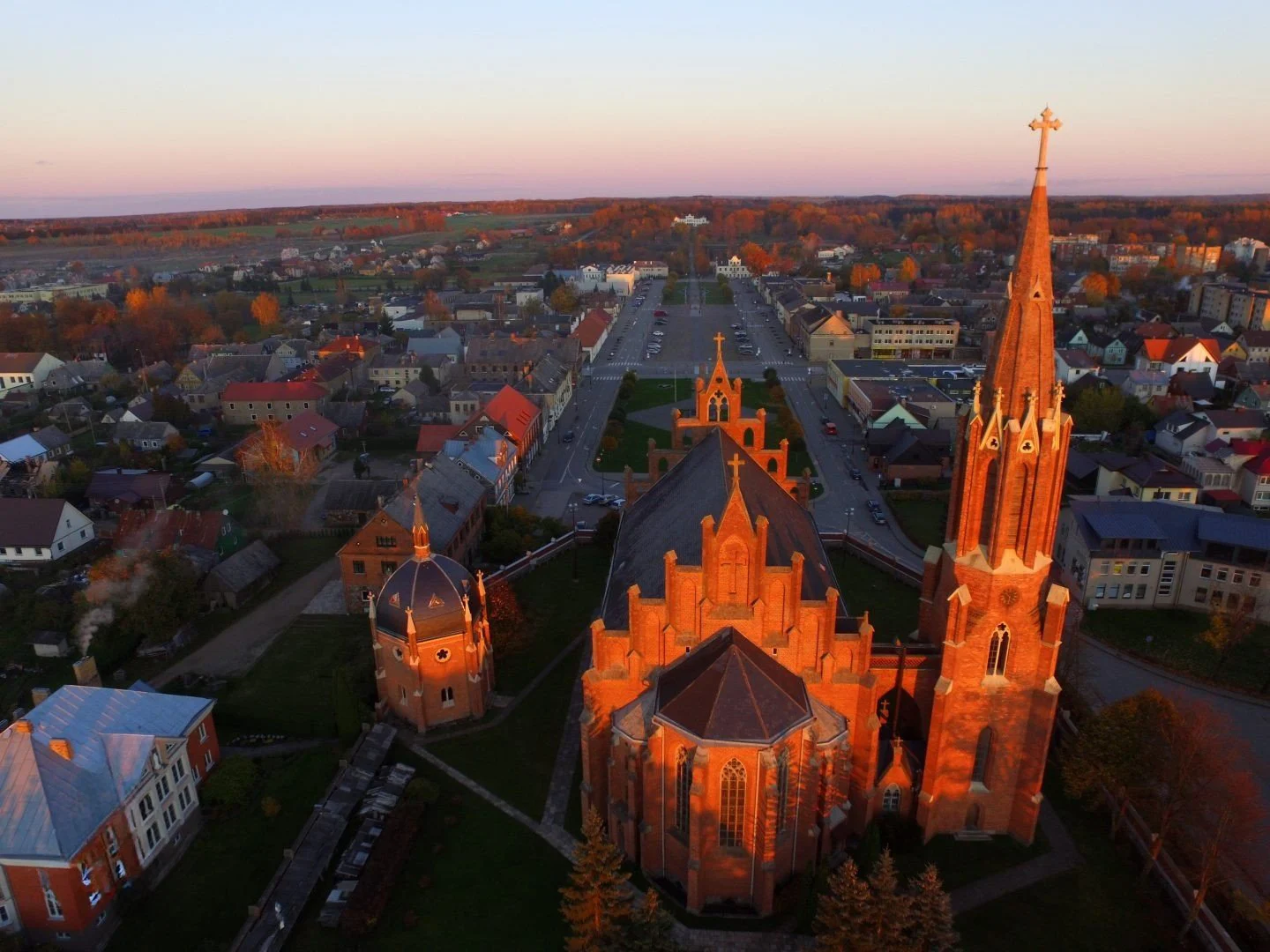
The start, and the heart of it. The square in Rokiškis is the longest in Lithuania, and its Classical layout took shape at the end of the 18th century, in the time of Ignas Tyzenhauzas. It is the best preserved town centre of its type in the country: the square has kept its form ever since it was laid out.
The square is lined with 19th century merchants’ houses and interwar architecture. It is worth slowing down and looking up, because many of the facades have a story.
In the middle of the square, facing the church, stands an obelisk by the sculptor Robertas Antinis, made in 1931. Nearby, by the municipal building, is a 1999 monument marking the town’s 500th anniversary.
Church of St Matthew the Apostle and Evangelist
On one side of the square stands a neo-Gothic church, often called the finest ensemble of its style in Lithuania. Built between 1866 and 1885, its towers are visible as you approach the town.
Inside, the altars are worth attention – they were made specifically for this church. The Czech organist Rudolf Lyman worked here, and the international organ music festival still carries his name. At the end of summer the church fills with the sound of the very organ he played.
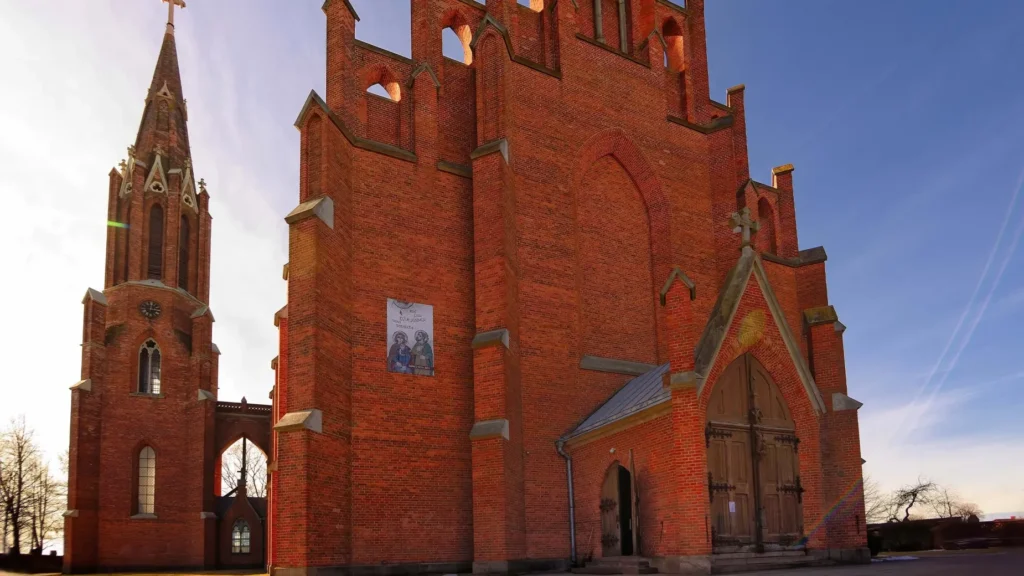
The neo-Gothic church towers are visible as you approach the town
The Manor Avenue
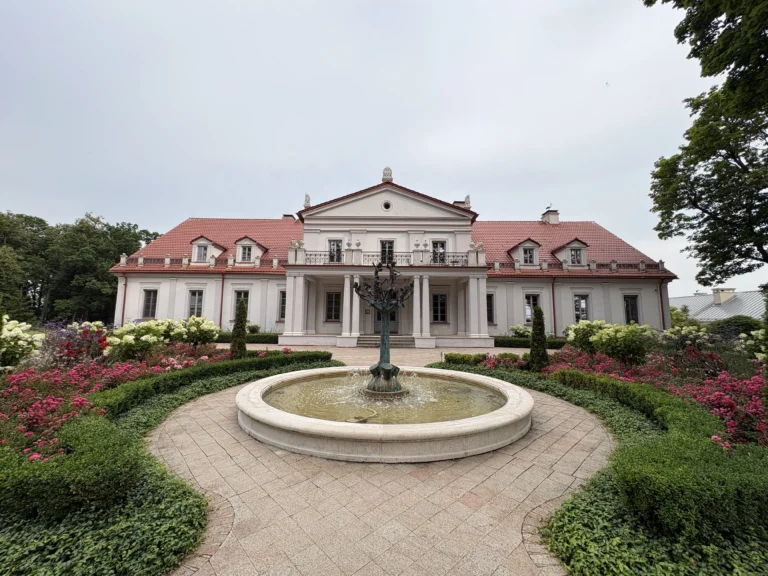
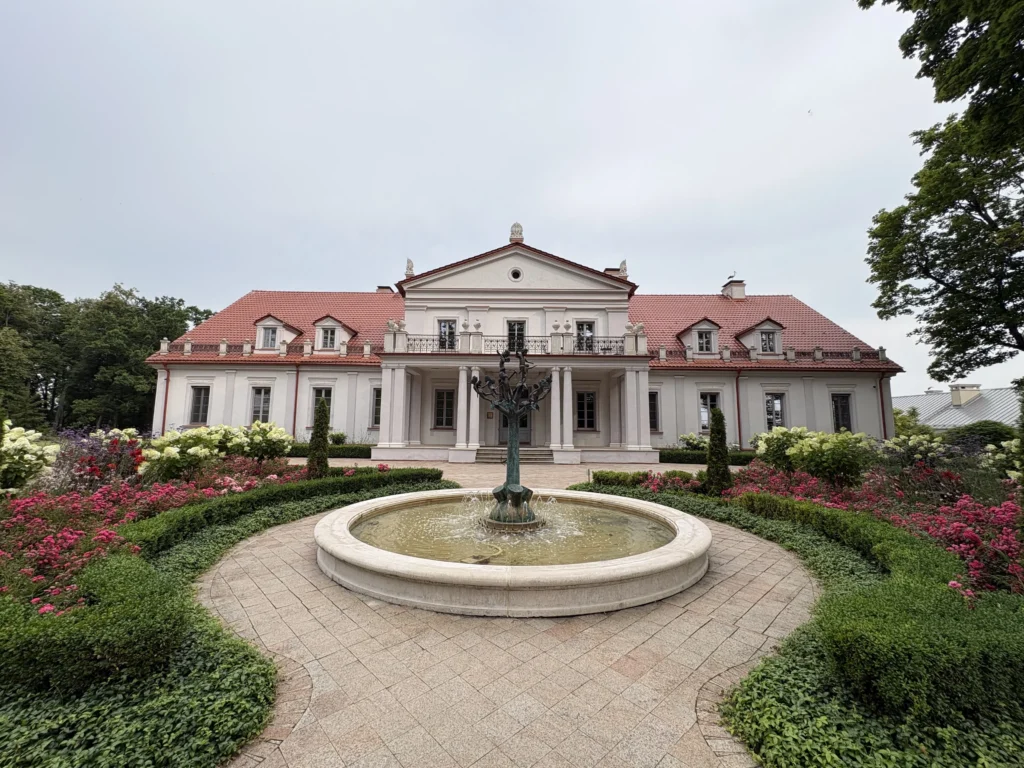
From the church runs an avenue of roughly a kilometre, linking the square to the Rokiškis Manor complex. The avenue is part of the same Classical composition: church, square and manor form a single axis.
Walking the avenue is the most pleasant way to get from the town centre to the manor. If you have time, it leads naturally into the manor park with its ponds, black swans and fallow deer.
The hare sculpture
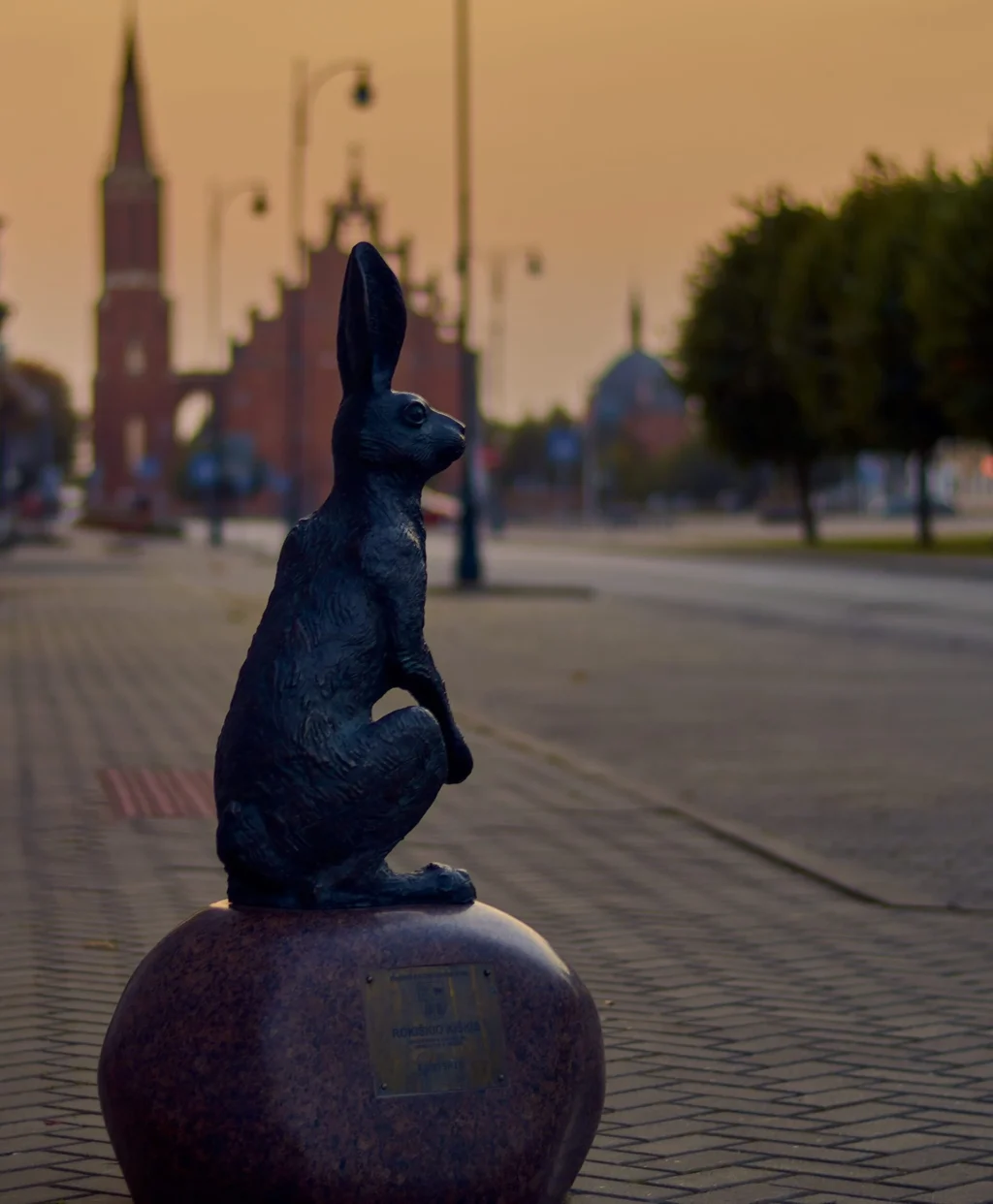
Outside the J. Keliuotis public library stands a small sculpture of a hare. It is a symbol of Rokiškis, put up in 2019 to mark the anniversary of the restoration of the Lithuanian press. It was made by Sergejus Plotnikovas and Saulius Druskis.
The hare comes from the legend behind the town’s name. The story goes that a hunter called Rokas lived here, watched over by the goddess Medeinė, and caught a great many hares – and that the name Rokiškis comes from his. Locals say: whisper your wish into the hare’s ear and it will come true.
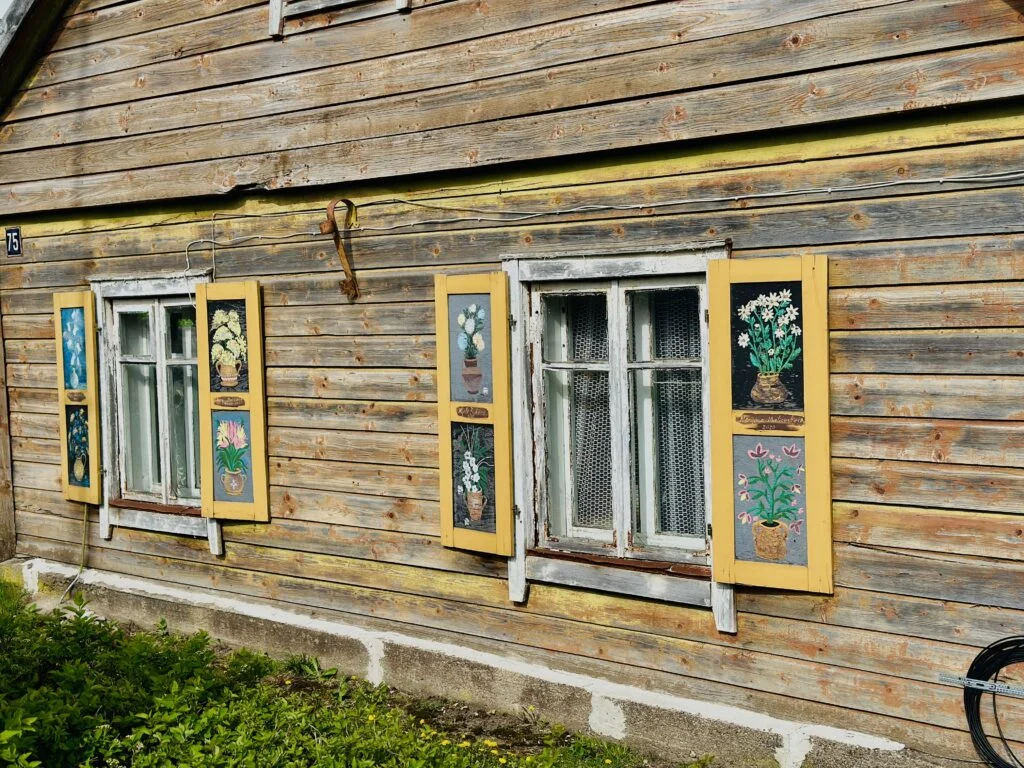
Painted shutters
Rokiškis is the only town in Lithuania that can call itself a town of painted shutters. The tradition of decorating houses was revived in 2003 on an idea by the artist Arūnas Augutis, and since 2005 shutter painting has become an annual open-air workshop.
More than three hundred shutters have been painted over the years. They decorate houses on Respublikos, Kauno, Kęstučio, Ąžuolų and other streets. It is a gallery under open sky, so as you walk the old town it is worth watching the windows: every shutter is a work in its own right.
How to walk it
A logical order: start on the square, look into the church, walk the avenue towards the manor, find the hare sculpture by the library on your way back, and watch for the painted shutters throughout, because they are scattered across the old town streets.
Two hours is an unhurried pace with stops. If you want the manor museum as well, allow half a day, because the exhibitions alone need extra time.
All of it begins a few steps from Respublikos street, so if you are staying in the old town you can start the route the moment you step out of the door.